
A cruiser electric bike is built for comfort first. You sit upright, your hands rest on wide handlebars that sweep back towards you, and a broad, sprung saddle takes the bumps. Add a motor and a battery and you have the bike most people picture when they think of renting an e-bike in a Florida beach town.
What is a cruiser electric bike?
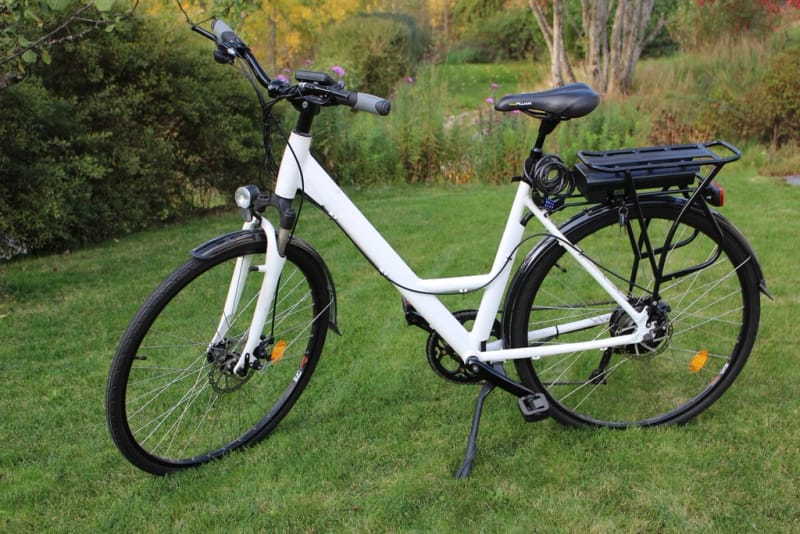
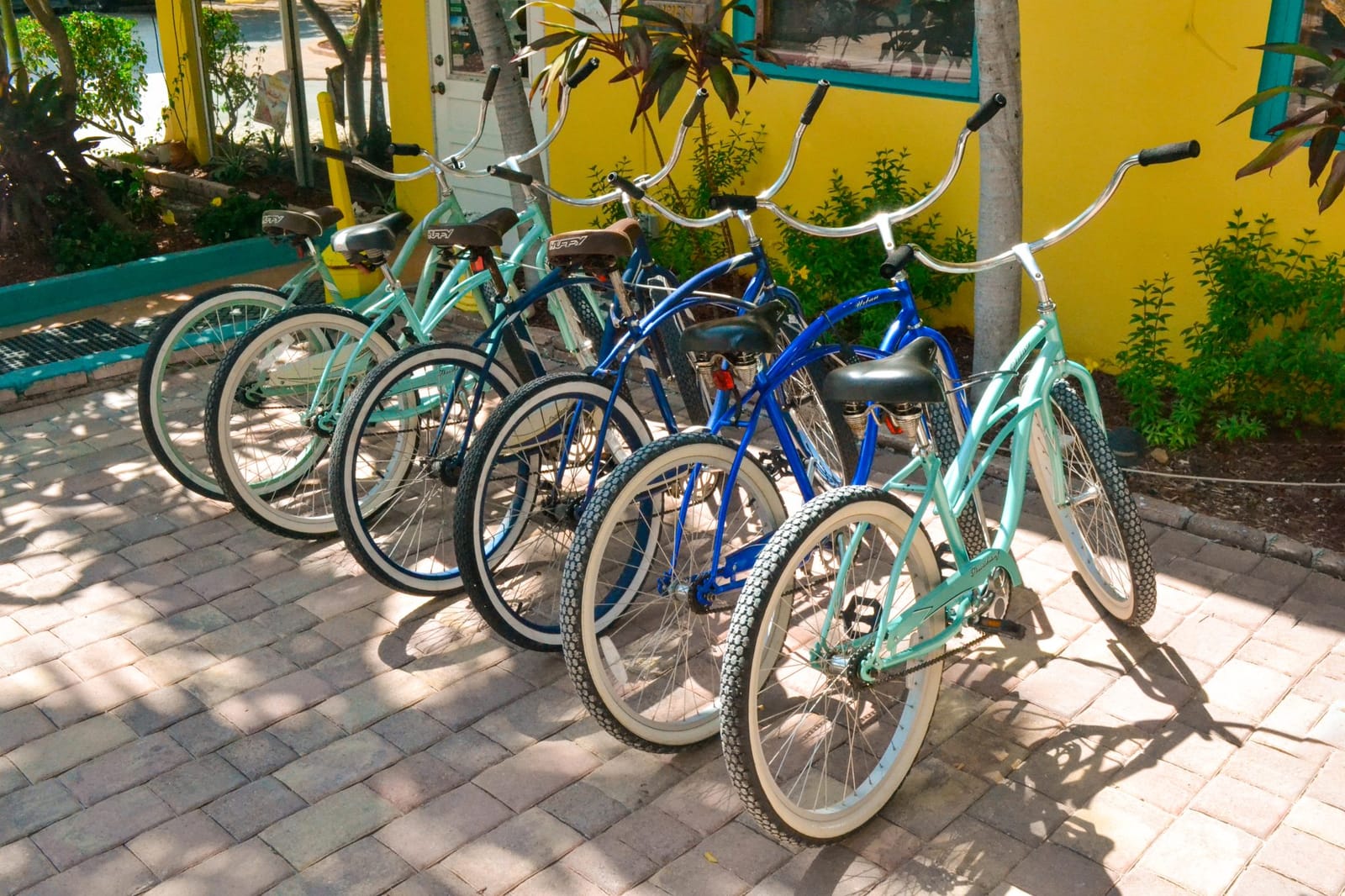
A cruiser e-bike takes the shape of the classic American beach cruiser and adds electric assist. The typical features are:
- An upright riding position. Your back is close to vertical, so there is little weight on your wrists
and you can look around instead of down at the path.
- Swept-back handlebars. The grips come back towards you, which is what makes the upright position
possible.
- A wide, padded saddle, often with springs underneath.
- Balloon tires, usually around 26 inches and wider than a road bike's, which smooth out cracks and
boardwalk planks.
- A long, low frame, often in a step-through shape, so getting on and off is easy.
- A battery on the frame or rear rack and a motor in the rear hub or at the pedals.
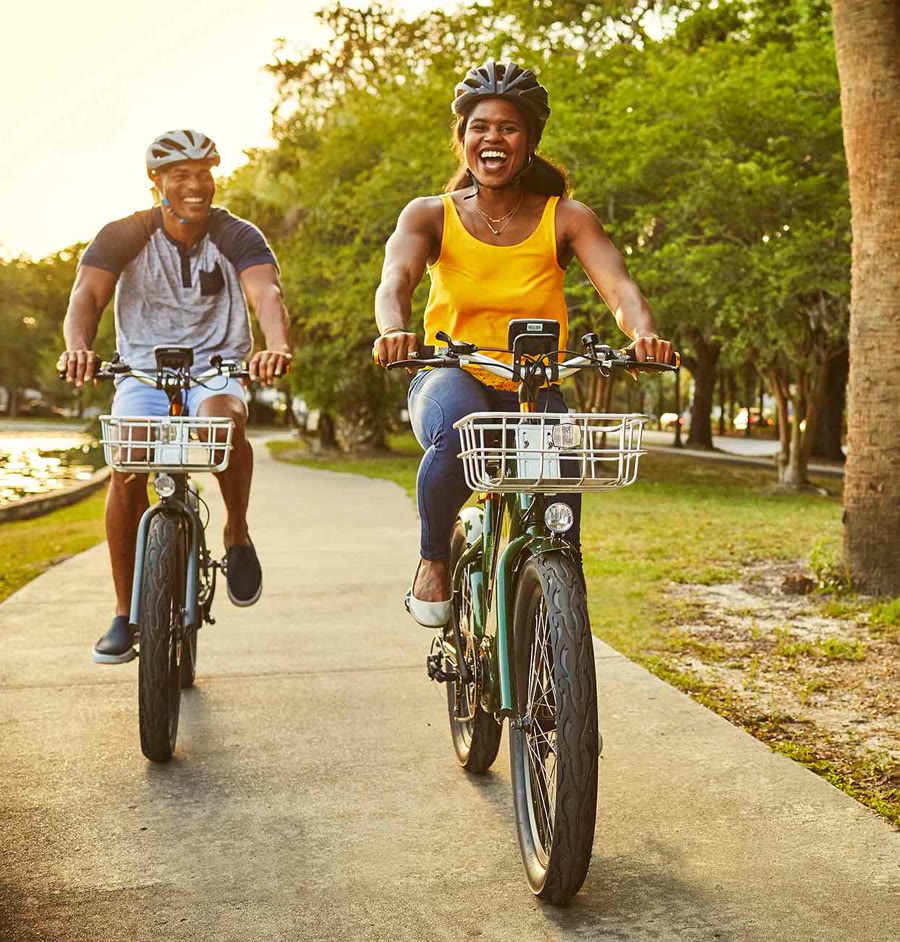
Many cruiser e-bikes come with a front basket or a rear rack, which is handy for a beach bag, a towel or groceries.
How a cruiser e-bike rides
Cruisers are steady rather than nimble. The long wheelbase and relaxed steering make them calm at low and medium speed, which is exactly how most people ride in a beach town: a few miles to the beach, a slow loop past the shops, a ride to dinner. The motor takes the work out of headwinds off the water and the odd bridge, which is where a traditional pedal cruiser gets hard work.
What cruisers are not built for is speed or distance. The upright position catches the wind, and the weight of the bike, often 55 to 70 pounds, is noticeable if you ever have to lift it or push it with the battery flat. On long trail days a commuter e-bike is less tiring.
Who a cruiser suits
- First-time e-bike riders. The calm handling and upright position make cruisers the easiest e-bike
to get used to.
- Riders who want comfort over pace, including many older riders. A
step-through cruiser frame is easier still to get on and off.
- Groups and families on holiday, where everyone is riding at the speed of the slowest rider anyway.
- Anyone riding to the beach, to eat or to shop, where a basket or rack does real work.
Where cruisers make sense in Florida
Cruisers are at their best on flat paved paths with frequent stops. That describes most of Florida's beach towns:
- 30A and the Emerald Coast. The Timpoochee Trail runs along 30A
past the beach accesses and town centres, and it is cruiser country. Our 30A rental guide covers the shops.
- Key West. The island is flat and compact, and a cruiser is the standard way to get around. See our
- St. Augustine, Fernandina Beach and the Gulf beach towns. Short distances, lots of stops and
plenty to look at.
If you want something with even more beach character, read our guide to the beach cruiser, the simpler, classic version of the same idea.
Pros and cons
| Pros | Cons |
|---|---|
| The most comfortable riding position | Heavy to lift and push |
| Easy to learn, calm handling | Slow and tiring over long distances |
| Baskets and racks for gear | Upright position catches headwinds |
| The most widely available rental type | Not built for sand or off-road |
What to ask the shop before you ride
- Is it pedal assist only, or does it have a throttle? A throttle (Class 2) lets you move off from a
stop without pedalling, which many cruiser riders like. Our e-bike classes guide explains the difference.
- How many assist levels does it have, and which should I start on? Start on the lowest.
- How far will the battery go at the level I will use? Range depends on assist level, rider weight,
wind and temperature, so ask the shop what its riders actually get.
- Does it have hand brakes or a coaster brake? Most e-cruisers have hand brakes; check before you
ride off.
- Is a lock, a basket and a helmet included? Riders under 16 must wear a helmet in Florida.
Our rental checklist has the full list, and the costs hub explains what rentals usually cost and what the card hold covers.
Riding a cruiser safely
Cruisers are easy, but they are heavy, and the motor makes them quicker than they look. Give yourself room to stop, especially on sandy paths where the front wheel can slide. Ride at walking pace on busy shared paths and boardwalks, ring your bell before passing, and switch the assist to its lowest level, or off, when you are weaving through people. Local rules on sidewalks and beach paths vary by town; our Florida e-bike law guide explains why.
Frequently asked questions
Is a cruiser e-bike good for beginners?
Yes. It is the easiest e-bike to get used to, thanks to the upright position, calm steering and comfortable saddle. Start on the lowest assist level until you are used to how quickly it moves off.
What is the difference between a cruiser e-bike and a beach cruiser?
A beach cruiser is the classic simple seaside bike, often with a single gear and sometimes no motor at all. A cruiser e-bike uses the same comfortable shape but always has a motor and battery, and usually gears and hand brakes. Our beach cruiser guide covers the traditional version.
Can you ride a cruiser e-bike on sand?
Not well. Cruiser tires are wider than a road bike's but much narrower than a fat-tire bike's, and they dig into soft sand. For sand, rent a fat-tire e-bike, and check whether riding on the beach is allowed where you are.
How heavy is a cruiser e-bike?
Most are somewhere around 55 to 70 pounds with the battery fitted. That is fine once you are rolling, but think about it if your rental has to go up steps or onto a car rack.