
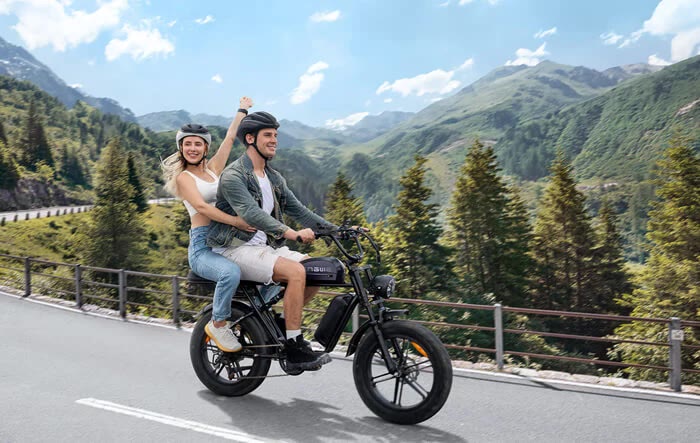
A fat-tire electric bike is built around its tires: around four inches wide, run at low pressure, so the bike floats over sand, shell and loose ground that would stop a normal bike. They look tough, they feel very stable, and in Florida's beach towns they have become one of the most popular e-bikes to rent.
What is a fat-tire electric bike?
The defining feature is the tire. Where a road bike tire is about an inch wide and a cruiser's about two, a fat tire is typically around four inches wide, sometimes more. The wide tire spreads the bike's weight over a bigger patch of ground, so it sinks less on soft surfaces and grips well on loose ones.
Other common features:
- A strong frame and wide forks to fit the tires.
- A large battery, because pushing fat tires takes more energy.
- Often a throttle as well as pedal assist (Class 2). Our
e-bike classes guide explains what that means.
- Either an upright cruiser-style frame or a more mountain-bike style frame, and sometimes a
step-through version.
How a fat-tire e-bike rides
Fat tires make a bike feel planted. They soak up cracks, roots and boardwalk gaps, and they keep their grip on gravel, shell and sandy patches of path. That stability is reassuring, especially for riders who are not used to bikes.
The trade-offs are weight and rolling resistance. Most fat-tire e-bikes weigh around 60 to 80 pounds, and the wide tires make more drag on smooth pavement, so the battery works harder. Steering is a little slower too. Without the motor, a fat-tire bike is hard work, which is why nearly all of them are electric.
Riding on sand in Florida
Fat tires are the only sensible choice for riding on sand, but there are two things to know first.
Check that riding on the beach is allowed. Many Florida beaches do not allow bikes on the sand at all, and rules differ between towns, counties and individual beach accesses. Look for signs, ask the shop, and read our Florida e-bike law guide on why local rules matter most.
Ride on firm sand, not soft sand. Even fat tires struggle in deep, dry sand. Where riding is allowed, the firm, damp sand near the water at low tide is far easier. Keep the bike out of the surf: salt water is hard on motors, batteries and chains.
Florida's Atlantic beaches, such as those around Daytona Beach and New Smyrna Beach, have wide, firm stretches at low tide; whether you may ride on them depends on local rules at the time.
Who a fat-tire e-bike suits
- Riders who want maximum stability, including many nervous or occasional riders.
- Anyone riding shell paths, dirt tracks or rough rural roads.
- Beach riders, where riding on the sand is permitted.
- Bigger riders, since fat-tire bikes are typically built strong. Ask the shop about its weight limit.
It suits people less well if the bike has to be lifted often, up stairs or onto a car rack, or if your riding is all on smooth pavement, where a cruiser or commuter is lighter and more efficient.
Pros and cons
| Pros | Cons |
|---|---|
| Floats on sand and loose ground | Heavy: hard to lift or push without power |
| Very stable and confidence-inspiring | More drag on pavement, so less range |
| Soaks up bumps without suspension | Slower steering |
| Popular and fun to ride | Wide bars and tires need more parking space |
What to ask the shop
- Am I allowed to ride it on the beach here, and where? Local shops know the rules at nearby
accesses.
- What tire pressure is it set to? Lower pressure floats better on sand; higher rolls more easily on
pavement.
- Does it have a throttle? Useful for starting off in sand.
- How far does the battery go? Fat tires use more energy; ask what range riders actually get.
- What happens if sand or salt damages the bike? Our
damage waivers guide explains what cover is worth buying.

Frequently asked questions
Are fat-tire e-bikes good on the beach?
Yes, on firm sand where riding is allowed. Their wide tires float where normal tires sink. They still struggle in deep, dry sand, and many Florida beaches do not allow bikes on the sand, so check first.
How much does a fat-tire e-bike weigh?
Most weigh around 60 to 80 pounds with the battery. They are easy to ride under power but heavy to lift and hard to push with a flat battery.
Are fat-tire e-bikes harder to ride?
Not in practice. They feel very stable and the motor covers the extra effort. Steering is a little slower than on a narrow-tire bike, so give yourself more room to turn.
Do fat-tire e-bikes need suspension?
Not for most Florida riding. The big, low-pressure tires absorb most bumps. Full suspension matters more on rough off-road trails, which is the territory of electric mountain bikes.